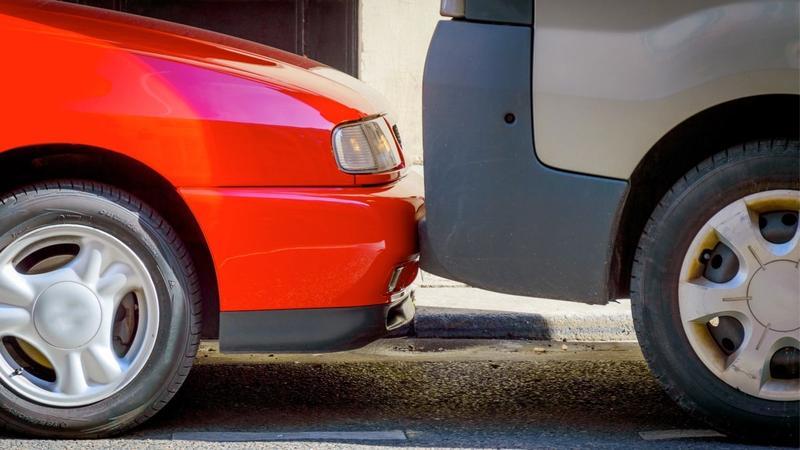
Parking lot collisions tend to be reported less frequently since they are usually relatively minor incidents, but they can be every bit as significant to your driving and insurance records. It's important to realize that they can affect your car insurance premium just as much as any other accident.
Who's at fault in a parking lot accident?
There are several ways two or more vehicles can be involved in a parking lot collision. Sometimes, it can be difficult to determine who is at fault in a parking lot accident, since the rules of the lot are not as well-known as the rules of the road. However, they are very similar. In addition, if there are no witnesses, it often comes down to one driver's word against the other’s.
According to Anne Marie Thomas, director of consumer and industry relations at the Insurance Bureau of Canada, the following rules can help you determine who is at fault in a parking lot accident.
- Drivers in a thoroughfare (a lane that directly exits onto a road or highway) have the right of way over a driver in a feeder lane. A feeder lane is a lane in a parking lot that does not directly exit onto a road or highway, such as the lane between two rows of parked cars. So, for example, if you were in a feeder lane turning into the lane that leads directly to the parking lot exit, you must wait for any traffic in that lane to pass before turning.
- Drivers leaving a parking space must yield to any other oncoming traffic. You must wait for all traffic to pass before pulling out or reversing out of your parking spot.
- If you are driving your vehicle, and you collide with a legally parked car, you are automatically at fault. No matter the circumstance, if you hit a legally parked vehicle, you are at fault. On the other hand, if the car is parked illegally, the driver of that car could be at fault.
- You must obey all traffic signs while in a parking lot. You are automatically at fault if you are in an accident after failing to follow the direction of a traffic sign in the parking lot, such as a stop or yield sign, or if you fail to follow the direction of a police officer.
- If you open your car door and hit another vehicle, you are automatically at fault for any damage. It is your responsibility to ensure there is no traffic approaching before you open a car door.
What should you do after a parking lot accident?
A parking lot accident should be handled the same as any other accident. Any accident should be reported to the police if damage exceeds the provincial limit. In Alberta and Ontario, for instance, the limit is $2,000.
Some people choose to pay for the accident out of pocket without informing their insurance company, but this approach can backfire. You are required to report all collisions to your auto insurance carrier. If you don’t report it, the other driver can still contact their insurance provider to make a claim — even if you already paid for the damages yourself. If it’s determined that you were wholly or even partially at fault for the accident, your rate may end up increasing as a result.
If you cause damage to another vehicle and the other driver is not present, leave a note on their dashboard with your contact information to avoid a potential hit-and-run claim against you. If your vehicle was damaged when you were not present, and no note was left with the other driver’s contact information, you may not be held at fault, but you will likely be required to pay the deductible to have the damage repaired since your insurance provider won’t be able to recoup any costs from the insurance policy of the driver who hit and ran.
All of the same procedures following an accident on the road are still good guidelines to follow if you are involved in a parking lot accident.
- Move your vehicle out of the way of traffic if you are able and it is safe to do so. If you are in the way of oncoming traffic, pull over to a less busy area if you can.
- Make sure that no one in your vehicle is injured. If there are any medical emergencies, you need to deal with these as quickly as possible. If anyone is in serious condition or unconscious, call 911 immediately.
- If you feel it is safe to do so, approach the other driver to see if they are OK. Use your judgement to determine if it seems safe to approach the other driver. Ask if they require any medical assistance.
- Get as much information as you can. Your auto insurance company will need to know the time, date, and location of the accident, as well as licence plate and make and model of the other driver's car. Get as much contact information as you can from the other driver, including their insurance company and policy number, along with their name, address, and phone number. If there are witnesses, collect contact information from them as well.
- Report the accident to the police if the damage exceeds the province limit. If you're in doubt about whether you should report the accident, call the police using your local non-emergency number and ask for instructions.
- Call your insurance company to report the accident. Your insurance company needs to know about the accident as soon as possible. They can help with the arrangements to get your car repaired and get your claim started as soon as possible to get you the assistance you need.
Following the rules of the road (and parking lot) is the first step in avoiding parking lot collisions. If an accident does occur, make sure you follow the correct steps by notifying the police and your car insurance company. This allows you to get the matter settled as quickly and efficiently as possible so you can get back to your daily routine.
If your insurance rate does increase after a parking lot accident, you should compare car insurance quotes to make sure you're still getting the lowest rate.