This article has been updated from a previous version.
The penalty you incur for a driving infraction depends on the type of traffic ticket you receive. Tickets typically fall into three classifications: minor, major, and serious/criminal convictions.
All ticket classifications, regardless of the fine or possible demerit points, can affect your insurance rate.
Read more to learn about the types of tickets and their respective ramifications.
In this article:
Minor, major, and serious/criminal driving infractions
Not all traffic tickets will impact your insurance premiums as it depends on the severity of the conviction. The following is a list of some of the most common types of minor, major, and serious/criminal convictions that will likely affect your car insurance rate.
Minor tickets
- Defective brakes
- Driver’s licence violations
- Driving with an insecure load
- Driving without an up-to-date inspection sticker
- Failure to carry an insurance card
- Failure to produce evidence of insurance to authority
- Failing to share the road
- Failing to signal
- Failure to surrender your licence to authority
- Failure to use seatbelts
- Failing to yield to another vehicle, cyclist or pedestrian
- Following too closely (tailgating)
- Headlight offences
- Improper driving in a bus lane
- Improper opening of a door
- Improper passing, lane change or turn
- Improper railway crossing
- Improper towing
- Improper use of divided highway
- Obstruction of licence plate
- Obstructing traffic
- Overloading (too many people in the car)
- Speeding
- Stop sign or traffic light infraction
- Unnecessary noise
- Unnecessary slow driving
- Unsafe moves
- Unsafe or prohibited turns
- Unsafe vehicle
- Use of radar warning device
Major tickets
- Distracted driving, including the use of a phone or other hand-held wireless communication device to text or dial, use of a hand-held electronic entertainment device, such as a tablet or portable gaming console, viewing display screens unrelated to driving, such as watching a video, programming a GPS device, except by voice commands
- False statement of insurance
- Failing to report an accident
- Failing to stop or improper passing of a school bus
- Failure to follow restrictions in a school zone or improper passing zone
- Failure to report damage to highway property
- Operating a motor vehicle with no insurance
- Producing false evidence of licence or insurance
- Speeding in a construction zone
- Violating licence restrictions (non-alcohol related)
Serious tickets and criminal convictions
- Careless or dangerous driving
- Criminal negligence
- Driving impaired (blood alcohol level over 0.08 in Ontario and two nanograms of THC per millilitre of blood.)
- Driving without insurance
- Failing to obey police
- Failing to remain at an accident scene
- Motor manslaughter
- Racing
- Refusing a breathalyzer test
- Speeding 50 kilometres over the posted speed limit (or set limit in your province)
- Stunt driving
- Violating licence restrictions (alcohol-related)
Related: How will an insurance claim affect your auto insurance rate?
Traffic tickets vs. Driving convictions
A traffic ticket serves as the initial notice of an alleged violation. Law enforcement officers issue it to individuals who have violated traffic laws or regulations.
The ticket includes essential details, such as the nature of the violation, date, time, and applicable fines or penalties. Think of it as an official notification—a starting point in the legal process.
A conviction occurs when someone found guilty of an offence goes through a legal process.
This process involves either:
- Admitting guilt and paying the associated fine (common for minor infractions).
- Contesting the ticket in court and being found guilty after a trial.
Conviction means that the individual has been formally judged to have committed the offence. Legal consequences may include fines, demerit points, license suspension, or other penalties, depending on the severity of the violation and relevant laws.
Your driver’s abstract shows your driving infractions
A driver’s abstract or record is a document issued by your province’s Ministry of Transportation that reports on your licence status. It includes the licence type, the date you were first licensed, the renewal date, and any tickets, convictions, suspensions, or reinstatements you’ve received over the last three years.
If you’re interested in seeing what’s on your record, you can get a copy of your driver’s abstract. In Ontario, for example, you can get your driver’s record for $12 (for a three-year driver’s record) from the Ministry of Transportation. Certified copies cost $18.
Related: How long do fines for driving without insurance stay on your driving abstract?
How long does a traffic ticket stay on your driving record in Ontario?
A traffic ticket remains on your Ontario motor vehicle record for two years from the date of conviction. However, depending on the specific ticket, you may experience an increase in your insurance premium for three years.
A Highway Traffic Act (HTA) conviction, such as speeding, stays on your record for three years after the date of conviction. Some insurance providers consider driving convictions for up to six years.
After this period, the violations are removed from your abstract and are no longer visible to companies.
Read more: If a traffic ticket stays on my record for three years, when does the three-year countdown start?
Demerit points from tickets
When you break the law, you may receive demerit points, which go on your driver’s record. Demerit points determine whether you can renew your driver’s licence or if you need to be re-tested.
Drivers begin with zero demerit points and accumulate points with certain convictions. Too many points within two years can cause your province’s Ministry of Transportation to suspend your licence.
More serious infractions result in more demerit points. Tickets may carry anywhere from zero to seven demerit points. To illustrate, below are the demerit points you’ll get for speeding in Ontario:
- 16 to 29 kilometres over the limit: three points
- 30 to 49 kilometres over the limit: four points
- 50+ kilometres over the limit: six points
Certain offences, such as exceeding the speed limit by 15 kilometres, may not result in any demerit points at all.
On the other end of the spectrum, offences earning seven demerit points include failing to remain at the scene of a collision and failing to stop when signalled or asked by a police officer.
How many demerit points you accumulate for speeding will differ provincially, such as in Alberta or Quebec.
Too many demerit points can carry significant penalties in Ontario:
- Two to eight points: You will receive a warning letter
- Nine to fourteen points: You will need to pay $50 to attend a meeting and explain why your licence shouldn’t be suspended. If you are unsuccessful, your licence will be suspended.
- More than fifteen points: Your licence will be suspended for 30 days.
Your insurance company may raise your premium after a ticket, regardless of whether the driving infraction penalizes you with demerit points.
Read more: What exactly is the deal with demerit points and how do they affect auto insurance?
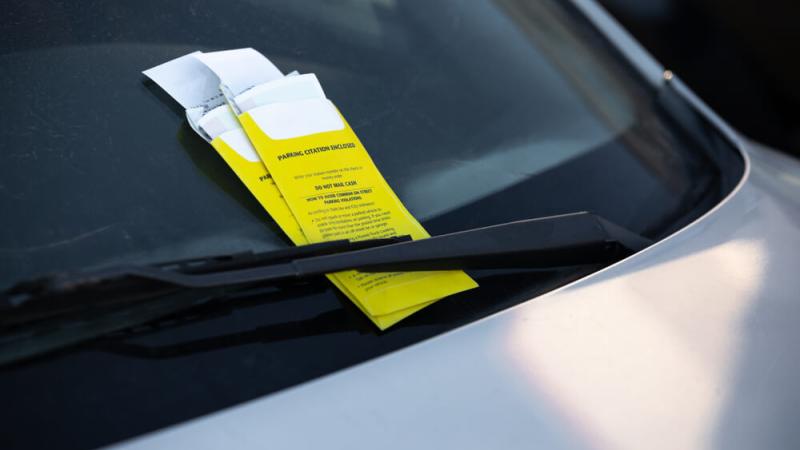
Parking tickets
Parking tickets do not raise your insurance rate or go on your driver’s abstract. However, unpaid parking tickets may prevent you from renewing your licence plate.
Tickets affect car insurance rates
While getting a traffic ticket will likely cause your premium to increase, the exact amount is difficult to predict. Car insurance rates can vary significantly from company to company. The easiest way to find which insurance companies offer the best price is to compare insurance rates online for free.
Read next: Canadian drivers and U.S. traffic tickets: How does a U.S. ticket affect you?