Last updated: January 2026
Driving in the United States is common for Canadians, whether for work, vacations, snowbird travel, or road trips. Canadian driver’s licenses and auto insurance policies are generally valid across the U.S. but receiving a traffic ticket while abroad can lead to consequences that follow you home.
Although many traffic rules are similar, U.S. enforcement practices, court procedures, and penalties vary by state. In some cases, a traffic conviction in the U.S. may be shared with Canadian provincial authorities and treated as if the offence occurred in Canada.
This guide explains how U.S. traffic tickets work for Canadians, what to do if you receive one, and how violations may affect your license and insurance after you return home.
Are Canadian driver’s licenses and insurance valid in the U.S.?
Yes. Canadian driver’s licenses are recognized throughout the United States, and most Canadian auto insurance policies provide coverage while driving in the U.S.
Most standard Canadian auto insurance policies typically extend coverage into the United States for short-term travel, so it’s important to review how your auto insurance works outside Canada before you drive across the border.
Drivers should always carry:
- A valid driver’s license
- Proof of insurance
- Vehicle registration if driving their own vehicle
Traffic laws, enforcement practices, and penalties vary significantly by state, so it is important to familiarize yourself with local rules before driving.
What happens if you get a traffic ticket in the U.S.?
For Canadian drivers visiting the United States, it’s important to know that traffic violations are handled at the state or local level, not federally. This means that if you receive a traffic ticket while driving in the U.S., you’ll need to either pay the fine or contest it in the local traffic court of the state where the violation occurred. Each state has its own rules and processes, so it’s a good idea to address the ticket promptly to avoid additional penalties.
U.S. traffic tickets may be:
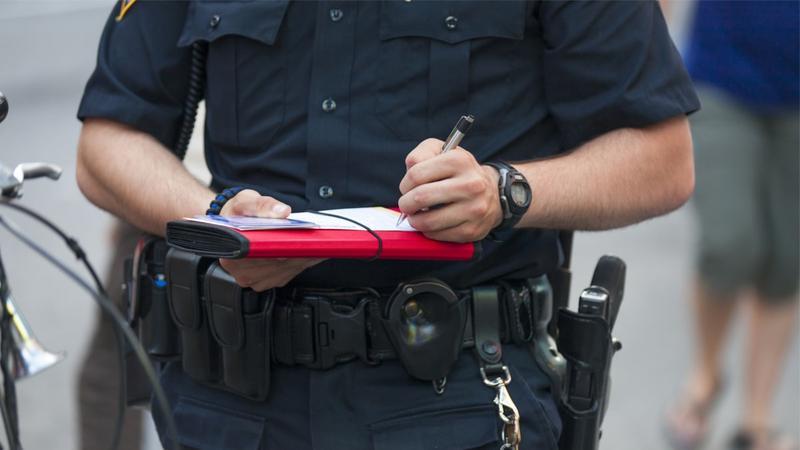
- Issued in person by a police officer during a traffic stop
- Sent by mail if captured by automated enforcement systems such as speed or red-light cameras, where permitted
Your ticket will include instructions on how to respond, payment deadlines, and court contact information. You must follow the procedures of the issuing state, not your Canadian province.
Important: Receiving a ticket does not automatically mean a conviction. Consequences typically arise only if the fine is paid or a court confirms the violation.
Reciprocal traffic ticket agreements between Canada and the U.S.
Some Canadian provinces have reciprocal traffic conviction agreements with certain U.S. states, primarily neighbouring states. These agreements exist largely because cross-border travel is most common between nearby jurisdictions, where drivers frequently cross for work, shopping, tourism, or family visits.
As a result, provinces and states have established information-sharing arrangements to ensure traffic laws are enforced consistently, and that serious driving behaviour is not overlooked simply because it occurred outside the driver’s home jurisdiction.
For example, some convictions from specific U.S. states may appear on an Ontario driving record and result in demerit points.
If a qualifying conviction is shared, your province may:
- Record the conviction on your Canadian driving record
- Apply demerit points under provincial rules
- Allow insurers to treat the offence as a domestic conviction
These agreements typically apply to moving violations, not parking tickets.
Examples of known reciprocal agreements
| Canadian Province | U.S. States |
|---|---|
| Ontario | New York, Michigan |
| Quebec | New York, Maine |
| British Columbia | Washington |
| Manitoba | North Dakota |
| New Brunswick | Maine |
| Nova Scotia | Maine |
Note: This list is not exhaustive. Agreements and enforcement practices can change. Always confirm current rules with your provincial licensing authority.
What happens if you ignore a U.S. traffic ticket?
Ignoring a U.S. traffic ticket as a Canadian driver can lead to several complications, both in the U.S. and back home. Here’s what to keep in mind:
- Increased fines and penalties: Unpaid tickets can accumulate late fees, making them more expensive over time.
- License suspension: The state that issued the ticket may suspend your driving privileges within that state.
- Driving and registration issues: Unresolved tickets can make it difficult to drive or register a vehicle in the issuing state.
- Reciprocal agreements with Canada: If you get a ticket in a state that has an agreement with your province the violation could be reported to Canadian authorities.
- Future enforcement: If you return to the U.S. with an unresolved ticket, you may face additional penalties or enforcement actions.
For example, if you receive a speeding ticket in New York and don’t address it, it could be shared with Ontario under their reciprocal agreement. This might result in demerit points on your Ontario license and could even impact your insurance rates.
Note: This list is not exhaustive. Agreements and enforcement practices can change. Always confirm current rules with your provincial licensing authority.
Common U.S. traffic violations for Canadian Drivers
Canadian drivers travelling in the United States can be ticketed just like local drivers if they violate traffic laws. U.S. police do not treat out-of-state or out-of-country drivers differently when it comes to enforcement, and traffic laws can vary by state, sometimes in stricter ways than drivers expect.
Common U.S. traffic tickets issued to Canadian drivers include:
- Speeding, including exceeding posted limits or driving too fast for road conditions
- Running red lights or stop signs, including rolling stops
- Distracted driving, such as using a handheld cellphone or texting while driving
- School bus violations, which are taken very seriously in many states and often carry heavy fines
- Parking infractions, such as parking in restricted zones or failing to follow local signage
While many of these offences may seem minor, they can still carry significant fines and, in some cases, be shared with Canadian licensing authorities depending on reciprocal agreements between jurisdictions.
Do Canadians have to pay U.S. traffic tickets?
Yes. If you receive a traffic ticket in the United States, it must be resolved through the state where the ticket was issued. Canadian drivers cannot pay or dispute U.S. tickets through Canadian courts or licensing authorities.
Most U.S. states give drivers several options to deal with a ticket:
- Pay the fine online using the official court or state payment portal
- Request a court hearing by mail or online to dispute the ticket
- Hire a lawyer to appear on your behalf if you cannot attend in person
Paying a ticket is usually treated as an admission of guilt. This means the offence is considered a conviction and may be recorded by the issuing state.
How U.S. traffic tickets affect Canadian insurance
If a U.S. traffic conviction is reported to your province, Canadian insurers may treat it the same as a domestic conviction, meaning, traffic convictions, whether domestic or foreign, can have an impact on your insurance premiums.
Possible impacts include:
- Higher premiums for minor convictions
- Significant rate increases or policy cancellation for serious offences
Most insurers review driving records for three to five years, and longer for major violations.
Do U.S parking tickets affect Canadian drivers?
Parking tickets issued in the United States are usually handled at the municipal or city level. In most cases, they do not affect your Canadian driving record or insurance, since parking violations are not considered moving offences.
That said, parking tickets should not be ignored. Unpaid parking tickets can still cause problems, including:
- Accumulating late fees and penalties over time
- Being sent to collections, which may create additional costs
- Issues if you return to the same city or state, such as enforcement actions or holds
- Extra charges from rental car companies, which may pay the ticket on your behalf and add administrative fees
- Problems with vehicle registration if the ticket is linked to a locally registered vehicle
While parking tickets are generally less serious than moving violations, it’s still best to resolve them promptly to avoid unnecessary fees or future complications.
Tips to avoid traffic tickets in the U.S.
Following local traffic laws is the best way to avoid tickets and complications while driving in the United States. A few simple habits can go a long way:
- Obey posted speed limits: Speed limits can change frequently between zones, especially in construction areas or school zones. Always stay alert to signage.
- Stop fully for school buses: When a school bus has flashing red lights and an extended stop sign, you must stop, even if you're on the opposite side of the road, unless there’s a physical median.
- Learn state-specific traffic rules: Some states have unique laws that may differ from what you’re used to in Canada. For example, in New York City, right turns on red are prohibited unless a sign explicitly allows it. This is different from most other parts of the U.S., where right on red is generally permitted unless prohibited by signage.
- Avoid distracted driving: Many states have strict laws against using handheld devices while driving. Use hands-free options to stay compliant.
- Be cautious in school zones: Reduced speed limits in school zones are strictly enforced, often during specific hours. Fines for violations can be significant.
- Move over for emergency vehicles: Most states require drivers to move over or slow down when approaching emergency vehicles, tow trucks, or maintenance vehicles stopped on the side of the road.
- Pay attention to parking rules: Parking violations, such as blocking fire hydrants or parking in restricted zones, can lead to fines or even towing in some cities.
By staying informed about local traffic laws and driving cautiously, you can avoid unnecessary tickets and ensure a smooth trip. If you’re unsure about a specific rule, it’s always safer to err on the side of caution.
What to do if you’re stopped by police
If you are pulled over by U.S. law enforcement, staying calm and cooperative is important:
- Pull over safely as soon as it is practical to do so
- Remain calm and polite when speaking with the officer
- Provide your driver’s license and proof of insurance when requested
- If you believe a ticket was issued in error, it’s best to handle any dispute later through the court process rather than arguing at the roadside.
Driving in the United States as a Canadian is usually straightforward, but traffic tickets can create lasting complications if not handled properly. U.S. tickets must be addressed through the issuing state, and some convictions may be shared with Canadian provinces and insurers.
By understanding your obligations and responding promptly, you can reduce the risk of unexpected legal or financial consequences after your trip.